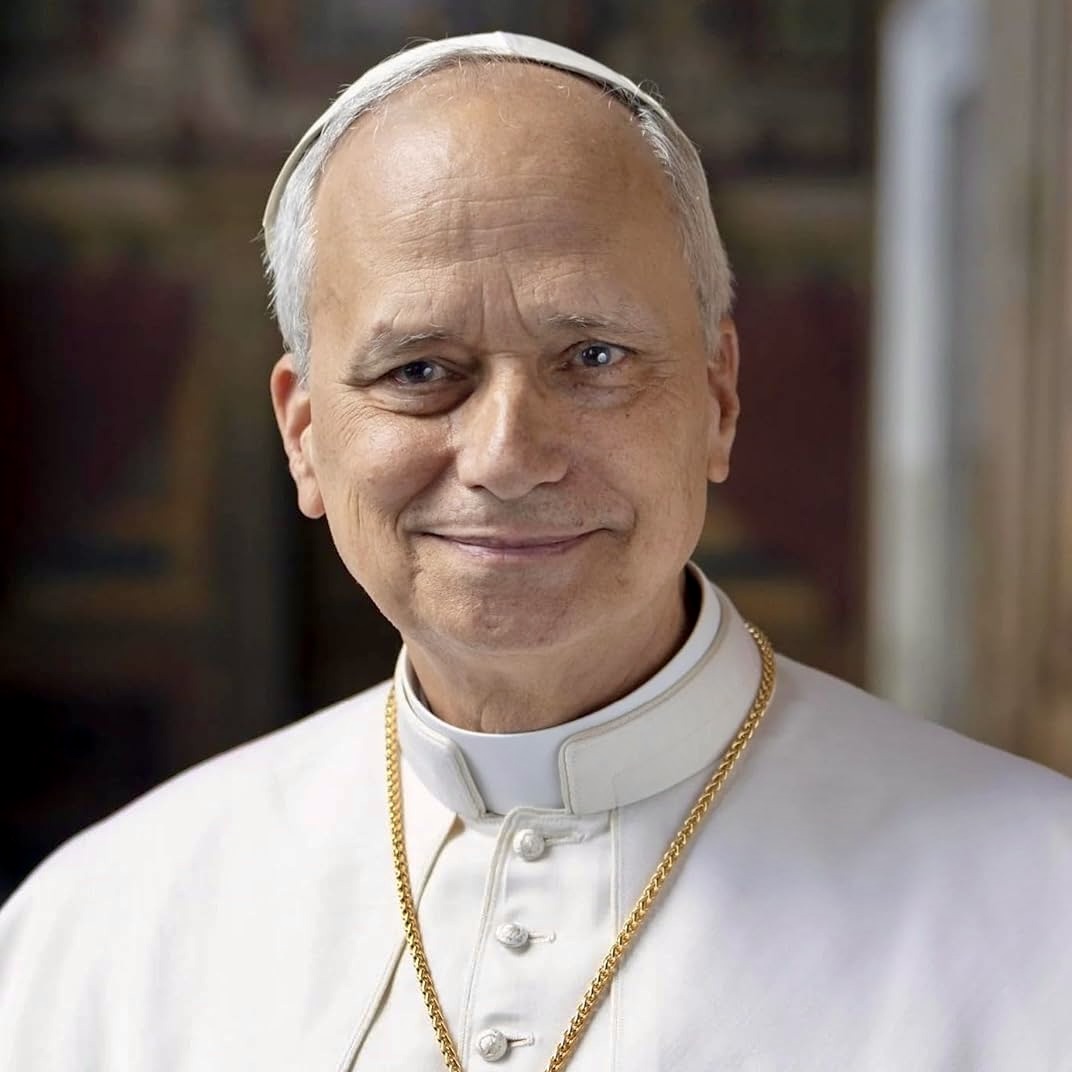
The intersection of silicon and spirituality has rarely produced a document as seismically disruptive as the one just issued from the Vatican. On May 25, 2026, Pope Leo XIV released his highly anticipated first encyclical, Magnifica Humanitas ("Magnificent Humanity"). Clocking in at a massive 42,000 words, this isn't just a casual homily on being nice online; it is a meticulously constructed, philosophically rigorous, and structurally devastating critique of the modern artificial intelligence ecosystem. For those of us in the technology sector—whether you are training multi-modal LLMs, architecture-designing distributed systems, or directing venture capital—this encyclical demands immediate attention. Pope Leo XIV has bypassed the typical surface-level platitudes of traditional "AI alignment" and pointed his finger directly at the structural incentives of Silicon Valley. He challenges our governance models, our corporate "ethical constitutions," our data pipeline labor practices, and the very anthropological frameworks that guide modern engineering. Here is an entry-level breakdown of the Vatican's new ethical blueprint for artificial intelligence and why it will reshape tech policy, engineering accountability, and compliance conversations for years to come. For the past few years, the tech industry's favorite shield against regulatory oversight has been the development of self-imposed ethical guidelines. We’ve seen the rise of "Constitutional AI," internal oversight boards, and beautifully worded principles of "Responsible AI." Pope Leo XIV effectively blows past these corporate defense mechanisms. In Magnifica Humanitas, he argues that an exclusively ethical approach is inherently flawed if it lacks a coherent underlying definition of what a human being actually is. > "So-called artificial intelligences do not undergo experiences, do not possess a body, do not feel joy or pain, do not mature through relationships and do not know from within what love, work, friendship or responsibility mean." — Pope Leo XIV, Magnifica Humanitas From the Vatican’s perspective, AI models are merely imitating certain functions of human intelligence. The critical error of modern technologists is treating these models as though they possess a form of proto-consciousness or genuine agency. Leo argues that when we conflate mathematical optimization with human cognition, we begin to devalue the human experience itself. Furthermore, the Pope takes direct aim at self-regulated ethical frameworks—specifically nodding to models that utilize internal "constitutions" to govern behavior. He warns that a more moral AI is utterly meaningless if that morality is unilaterally determined by a tiny, insular group of corporate executives and engineers. Ethics cannot be treated as a proprietary codebase patch; it must be subjected to open, democratic frameworks of shared social justice. Perhaps the most striking phrase used throughout the document is the Pope's explicit call to "disarm" AI. While the casual observer might assume this refers solely to lethal autonomous weapons systems (LAWS)—which the Pope does completely condemn—the encyclical uses the term in a much broader, systemic context. Leo defines the "armed" logic of AI as an economic, cognitive, and geopolitical phenomenon driven by the absolute pursuit of commercial and global dominance. [Armed Logic of AI] ──► Driven by Geopolitical/Commercial Dominance │ ├──► Cognitive Monopoly (Information Control) ├──► Economic Exploitation (Labor & Resources) └──► Kinetic Weaponization (Autonomous Warfare) To disarm AI does not mean we reject the technology entirely. Instead, it means structurally preventing the technology from dominating humanity. The Pope explicitly categorizes the current AI landscape as an arms race where the weapon isn't just kinetic—it is the control of human attention, behavioral modification, and cognitive monopoly. On the military front, the encyclical draws an uncompromising line in the sand. The Pope states outright that it is entirely impermissible to entrust lethal or otherwise irreversible decisions to artificial systems. By surrendering combat decisions, judicial sentencing, or critical medical triage to automated algorithms, humanity abdicates its core spiritual obligation of moral accountability. A machine can calculate probabilities, but it can never exercise mercy, recognize nuance, or bear the weight of a conscience. A foundational pillar of Catholic Social Teaching is the principle of subsidiarity. This principle dictates that social, economic, and political decisions should always be made at the most local level possible, rather than being centralized by an overarching, distant authority. In Magnifica Humanitas, Pope Leo XIV applies subsidiarity to the cloud. He exposes a severe structural risk: the hyper-concentration of power within a minuscule technocratic class of AI developers, computing infrastructure providers, and data gatekeepers. | The Technocratic Risk Profile | The Vatican's Subsidiarity Framework | | Centralized Power: A handful of firms dictate the narrative, economic access, and information architecture globally. | Local Empowerment: Algorithmic tools must serve to enhance local decision-making, not replace it. | | Opaque Governance: Black-box models operate without public oversight, running proprietary ethical guardrails. | Shared Social Justice: Ethical frameworks must be openly discussed and subjected to community-driven standards. | | Algorithmic Discrimination: Opaque systems quietly restrict access to credit, healthcare, and employment opportunities. | Radical Transparency: Clear audits on how data and code influence life-altering opportunities for individuals. | When a tiny group in Northern California or Seattle builds models that quietly alter information streams, consumption habits, and democratic processes globally, they are executing what the Pope labels a new form of colonial dominion. This technocratic centralization alienates communities, strips local populations of agency, and forces the global public to conform to a monoculture optimized solely for shareholder metrics. As software engineers and tech evangelists, we love to talk about the elegant simplicity of clean code, RLHF, and automated workflows. But Pope Leo XIV pulls back the curtain to expose the human cost of the AI boom, pointing directly to the global underclass that powers our shiny consumer interfaces. The digital realm relies heavily on what the Pope calls the "silent work of millions." This refers to the massive distributed workforce across developing nations tasked with: Data labeling and tagging Model training feedback loops Content moderation (filtering out horrific material) [The Hidden AI Pipeline] Raw Material Extraction ──► Human Labor Exploitation ──► Opaque Algorithm ──► Consumer App (Rare Earth Minerals) (Underpaid Data Labelers) (Centralized Cloud) (Polished UX) Often operating under brutal quotas, experiencing secondary trauma from filtering toxic content, and working for pennies without any job security, these workers are the foundation of modern AI. The encyclical labels these dynamics as new forms of slavery. Leo doesn't stop at labor; he connects this directly to environmental degradation. The frantic race to build massive data centers has ignited a desperate scramble for energy and rare earth minerals. The Pope brilliantly calls these minerals "the new rare earths of power." He warns that the environmental and human exploitation occurring in mining communities to feed the compute-heavy infrastructure of Big Tech is a direct violation of our duty to protect our common home. The integration of artificial intelligence into the enterprise workforce isn't just an efficiency play; it's an economic disruption engine. To ground his arguments, the Pope points to concrete data, referencing a pivotal 2025 MIT study estimating that AI could replace up to 11.7% of the United States workforce. Rather than celebrating this as a liberation from labor, Leo warns that without active, aggressive intervention, technological progress will inevitably yield deep structural inequalities. The Machine Inversion: Instead of designing systems to support, elevate, and protect the human worker, modern corporate implementation frequently forces human beings to adapt to the exhausting speed, algorithmic pacing, and rigid demands of the machine. When a worker's performance, employment status, or daily livelihood is governed by an automated optimization score, their inherent human dignity is compromised. The Pope demands that society aggressively invest in upskilling individuals and establishing safety nets to ensure that technology does not widen the chasm between the hyper-wealthy technocratic elite and the displaced working class. For a publication like Technitrox, which tracks the evolution of digital media, the Pope’s section on AI-fueled disinformation hits incredibly close to home. The velocity with which generative AI can create hyper-realistic deepfakes, synthetic text, and synthetic audio has completely destabilized our shared reality. Leo notes that democratic life is fundamentally weakened when a society loses its collective pursuit of the truth. When the public can no longer distinguish between authentic human expression and artificial manipulation, trust evaporates entirely. Generative AI "Slop" ──► Epistemic Exhaustion ──► Public Indifference to Truth ──► Totalitarian Creep This sequence represents a dangerous trajectory. The Pope issues a stark political warning: "Indifference to the truth leads, slowly but surely, to a descent into totalitarianism." When a citizenry is so overwhelmed by algorithmic noise that it surrenders the struggle to find the truth, it becomes incredibly easy for centralized powers to assert total control over narrative and thought. It is easy to read a papal encyclical as a high-minded, unachievable manifesto. However, Magnifica Humanitas actually contains highly practical mandates for product managers, software engineers, and ordinary consumers alike. If we want to build technology aligned with Leo’s vision, we must integrate several core practices into our product life cycles: We must reject the tech-industry dogma that says "if it can be built, it must be built." Product teams need to practice deliberate restraint, acknowledging that some automated systems pose too high a risk to human connection and community stability to justify their deployment. The Pope expresses deep concern over the mental health crisis hitting young people who are given personal mobile devices too early. He warns against the "subtle temptation which renders human thought seemingly superfluous precisely when it is most needed." When kids offload their writing, reasoning, and emotional processing to AI agents, they risk losing the desire to engage in authentic, messy human relationships. We must design products that encourage critical thinking rather than rendering human thought obsolete. If you are working on algorithms that handle credit distribution, personnel selection, or access to essential public services, you have an ethical and spiritual responsibility to ensure full transparency. Black-box models that perpetuate historical discrimination under the guise of mathematical neutrality must be dismantled. Pope Leo XIV’s Magnifica Humanitas makes one thing abundantly clear: the era of treating AI ethics as a mere public relations exercise is officially over. Technology is fundamentally non-neutral. Every single line of code we write, every optimization metric we select, and every data pipeline we construct reflects an underlying vision of humanity. If our vision is purely extractive—treating humans as data points to be monetized, workers to be replaced, or minds to be algorithmically steered—then we are actively building a future that is profoundly dehumanizing. As builders, creators, and innovators, the challenge has been laid down. The goal shouldn't be to create a "perfect machine" that renders human judgment irrelevant. The true goal is to build tools that protect our common home, defend human dignity, and serve the common good. It's time to disarm the algorithm and design a technology landscape that is truly worthy of magnificent humanity.1. Beyond the "AI Constitution": The Anthropological Foundation
2. The Mandate to "Disarm" Artificial Intelligence
The Absolute Red Line: Irreversible Decisions
3. Subsidiarity vs. The Technocratic Elite
4. The Supply Chain of Shadow Labor: "New Forms of Slavery"
5. Macroeconomic Displacement and Structural Inequality
6. The Erosion of Epistemology: Disinformation and Totalitarianism
7. The Actionable Blueprint for Technologists
Exercise Restraint by Design
Protect the Youth from the "Perfect Machine"
Audit the Algorithmic Bias Loop
Moving Toward Structural Justice