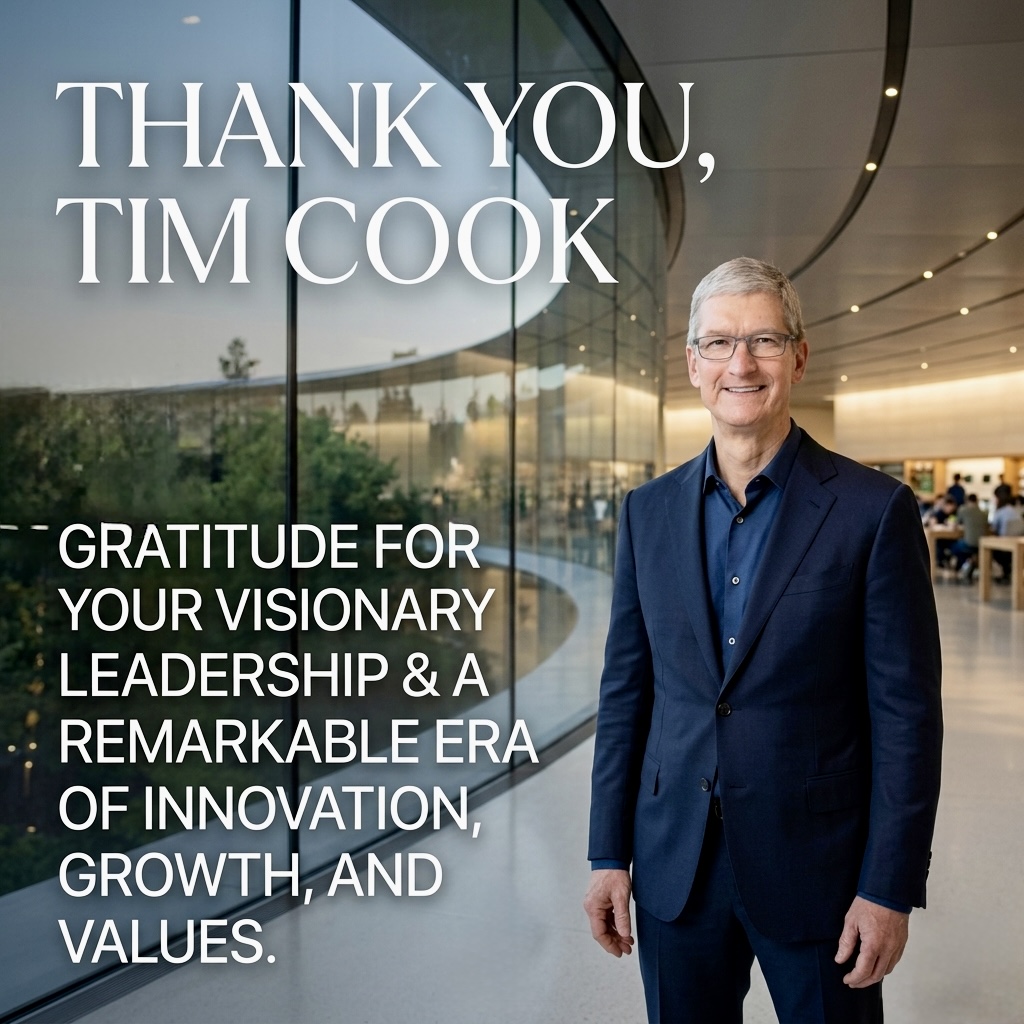
When Tim Cook took the helm of Apple in August 2011, the tech world held its collective breath. Stepping into the shoes of a visionary founder is famously one of the most formidable challenges in corporate history, and the skepticism was palpable. Critics wondered aloud if a supply chain expert—a man known for his operational precision rather than flashy keynote theatrics—could sustain the creative magic that defined the company. Today, as Apple announces that Tim Cook will transition to the role of Executive Chairman this September, passing the baton to John Ternus, that initial skepticism feels like a relic of a bygone era. Over his nearly fifteen-year tenure as Chief Executive Officer, Cook did not just keep the lights on; he systematically transformed Apple into an undisputed global titan. He took a company that was wildly successful and turned it into an enterprise of unimaginable scale, financial might, and cultural influence. As we prepare for a new chapter in Apple’s history, it is the perfect moment to reflect on the staggering successes and enduring legacy of the Tim Cook era. To truly understand Tim Cook’s impact, one must first look at the sheer scale of the financial growth achieved under his leadership. When Cook became CEO, Apple’s market capitalization was hovering around $350 billion—a massive figure at the time, but only a fraction of what was to come. Under his steady hand, Apple smashed through the glass ceiling of corporate valuation, becoming the first publicly traded U.S. company to reach a $1 trillion valuation in 2018. He didn't stop there. He guided the company to $2 trillion, then $3 trillion, and the market capitalization now sits at an astonishing figure exceeding $4 trillion. This financial triumph was not an accident of market momentum; it was the direct result of Cook’s unparalleled operational genius. Cook recognized early on that the secret to Apple’s future lay not just in what they designed, but in how flawlessly they could manufacture and deliver those products to every corner of the globe. * Supply Chain Dominance: Cook forged a global supply chain that is studied in business schools worldwide. He streamlined inventory, optimized supplier relationships, and ensured that Apple could launch products simultaneously across dozens of countries with surgical precision. * Navigating Geopolitics: Unlike many of his peers, Cook proved to be a master diplomat. He successfully navigated complex international trade disputes, tariffs, and global pandemics, ensuring that Apple’s manufacturing lines rarely stalled even in the face of unprecedented global disruptions. * Shareholder Value: Through strategic stock buybacks and the initiation of a reliable dividend program, Cook rewarded the investors who believed in his vision, creating generational wealth for shareholders while keeping the company’s cash reserves robust. The critique that Apple would stop innovating without its founder was thoroughly dismantled by the introduction of entirely new, industry-defining product categories under Cook’s watch. He recognized that the future of technology was moving closer to the body, leading to the creation of the booming wearables division. The Apple Watch: Introduced in 2015, the Apple Watch started as a digital novelty and a fashion accessory, but Cook astutely pivoted its focus toward health and wellness. By adding features like heart rate monitoring, ECG capabilities, blood oxygen sensors, and fall detection, the Apple Watch transcended its status as a mere gadget. It became an essential, life-saving medical tool worn by millions. Today, Apple dominates the global smartwatch market, shipping more traditional watches than the entire Swiss watch industry combined. AirPods and the Wireless Revolution: When Apple courageously removed the headphone jack from the iPhone, they provided the ultimate solution: AirPods. Released in 2016, these wireless earbuds became an instant cultural phenomenon. The iconic white stems became a ubiquitous sight on city streets globally. AirPods didn't just capture the wireless audio market; they essentially created it, generating billions of dollars in revenue and solidifying the seamless, wireless ecosystem experience. The Apple Silicon Transition: Perhaps one of the most audacious technological leaps under Cook’s leadership was the transition from Intel processors to Apple's own custom-designed M-series chips for the Mac lineup. Executed flawlessly over several years, Apple Silicon revolutionized the computer industry. It provided Macs with a staggering leap in performance while dramatically increasing battery life, leaving competitors scrambling to catch up and revitalizing the Mac product category for a new generation of professionals and creatives. Early in his tenure, Tim Cook recognized a fundamental vulnerability: Apple was heavily reliant on the cyclical, seasonal sales of iPhones. To build a more resilient company, he spearheaded a massive pivot toward digital services. He envisioned a future where the devices in our pockets were not just one-time purchases, but gateways to a continuous, value-added ecosystem. This strategic shift birthed a portfolio of digital offerings that have fundamentally altered Apple’s revenue structure: * Apple Music & Apple TV+: Entering highly competitive markets, Cook built streaming platforms that quickly secured hundreds of millions of subscribers and even garnered historic Academy Award wins for original content. * Apple Pay: He revolutionized mobile payments, turning the iPhone into a secure digital wallet that is now accepted by millions of merchants worldwide, subtly changing how we interact with commerce on a daily basis. * iCloud and App Store Growth: By expanding cloud storage and continuously refining the App Store ecosystem, Cook ensured that developers had a robust marketplace, while Apple secured a steady, reliable stream of recurring revenue. Today, Apple’s Services division alone generates more revenue than many Fortune 50 companies combined. It provides the financial bedrock that insulates the company from the volatile swings of hardware sales, proving Cook to be an incredible, forward-thinking strategist. While the financial and technological successes are staggering, Tim Cook’s legacy is equally defined by the moral compass he brought to the CEO office. He fundamentally shifted how a mega-corporation operates within society, explicitly tying Apple’s corporate strategy to its core values. Privacy as a Human Right Long before data scandals rocked the tech industry, Cook planted his flag, declaring privacy a fundamental human right. He stood firm against government pressure to build encryption backdoors into the iPhone, enduring intense political heat to protect user data. He also implemented features like App Tracking Transparency, forcing the digital advertising industry to adapt and putting control back into the hands of the consumer. In an era where tech companies commodify user data, Cook made privacy a premium feature of the Apple ecosystem. Environmental Stewardship Under Cook, Apple took on an ambitious, aggressive environmental agenda. He oversaw the transition of Apple’s global corporate operations to 100% renewable energy and pushed the company toward a commitment to make its entire supply chain and product life cycle carbon neutral. The construction of Apple Park, a stunning architectural marvel powered entirely by clean energy, stands as a physical monument to this commitment to sustainability. Diversity and Inclusion Cook has been an outspoken advocate for human rights, diversity, and inclusion. By fostering a corporate culture that values different perspectives and actively works to make technology accessible to everyone—regardless of physical or cognitive ability—he ensured that Apple’s products truly serve all of humanity. As we look toward September 1, 2026, when John Ternus will officially step into the role of Chief Executive Officer, the state of Apple could not be stronger. Ternus, an engineering veteran who has spearheaded the hardware development of the very products that define Apple today, inherits a company that is vastly different from the one Cook inherited in 2011. Tim Cook did not just maintain the house that Steve Jobs built; he expanded it into a global, multi-trillion-dollar empire. He proved that a company can achieve unprecedented, record-breaking financial success while remaining staunchly committed to user privacy, environmental sustainability, and operational excellence. As Executive Chairman, Cook will continue to lend his steady guidance and diplomatic expertise to the company he loves. But his tenure as CEO will forever be remembered as a masterclass in modern corporate leadership. He was the quiet giant—a leader who didn't demand the spotlight, but whose strategic brilliance, unshakable moral conviction, and operational mastery built the most valuable and influential company the world has ever seen.The Architect of Trillions: Financial and Operational Mastery
Redefining Consumer Technology: Wearables and Apple Silicon
The Services Juggernaut: Building an Empire Beyond Hardware
A Stand for Values: Privacy, the Environment, and Accessibility
The Legacy Continues: Passing the Baton