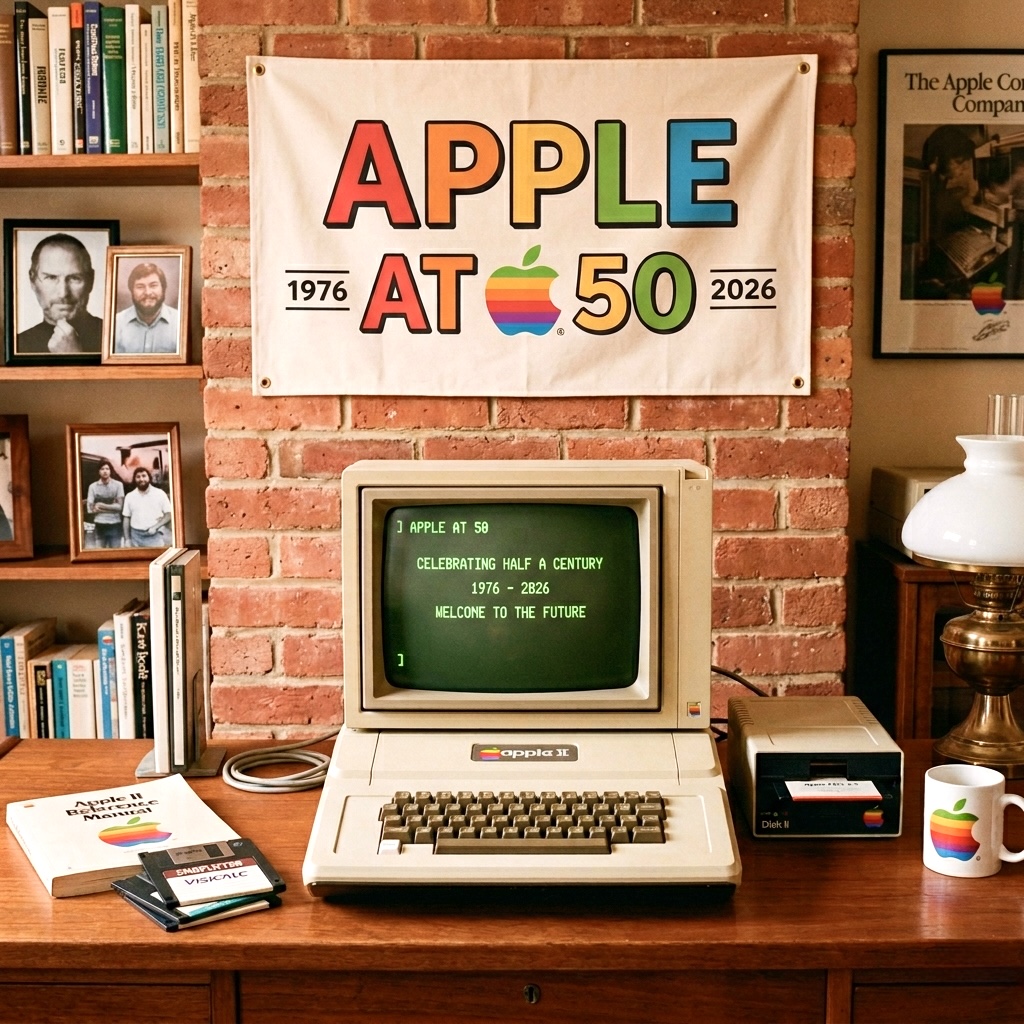
In the early 1970s, the "Two Steves" were adrift in the silicon-rich air of Northern California. Steve Wozniak, having finished a stint at the University of Colorado and later at De Anza College, was the quintessential "engineer’s engineer." He was obsessed with doing more with less—a trait that would define the Apple II’s architecture. Steve Jobs, meanwhile, was navigating a more esoteric path, dropping out of Reed College and eventually finding himself at Atari. Their first collaboration wasn't a computer; it was a subversion of the telecommunications system. The "Blue Box" was a device that mimicked the multi-frequency tones used by the telephone company to route long-distance calls. While Wozniak saw it as a fascinating puzzle of digital logic and analog frequency, Jobs saw a business model. They sold them in dorm rooms for $150 a piece. "I don't think there would have been an Apple if there hadn't been Blue Boxes," Jobs would later reflect. It was the proof of concept that Wozniak’s hardware could be packaged and sold by Jobs’s ambition. The Homebrew Catalyst and the MOS 6502 By 1975, the Homebrew Computer Club became the epicenter of the microcomputer revolution. Wozniak was a regular, but he was intimidated by the Altair 8800. He wanted something simpler, something that felt like a typewriter. The breakthrough came with the MOS Technology 6502 microprocessor. While Intel’s 8080 was selling for hundreds of dollars, the 6502 was available for about $25. This chip became the heartbeat of the Apple I and later the Apple II. Wozniak began writing a version of BASIC (the Beginner's All-purpose Symbolic Instruction Code) for the 6502 by hand, on paper, before he even had a computer to run it on. The Apple I: The "Naked" Motherboard The Apple I was not a consumer product in the modern sense. It was a populated circuit board. It didn't come with a case, a keyboard, or a monitor. You had to provide your own. But it had one revolutionary feature: a built-in video interface. In an era where most computers used front-panel lights and switches, Woz’s machine talked to a television. Jobs saw the potential and convinced Woz to stop giving the schematics away for free. They formed Apple Computer on April 1, 1976, and sold the Apple I for $666.66—a price Woz picked because he liked repeating digits. The Technical Masterpiece: The Apple II If the Apple I was a proof of concept, the Apple II was the revolution. Released in 1977, it was the first "personal computer" designed to look like a household appliance. It had a plastic case (Jobs’s contribution), color graphics (Woz’s obsession), and expansion slots. Wozniak’s brilliance was most evident in how he handled color. Most computers at the time required massive amounts of memory and dedicated chips to produce color. Wozniak realized he could "trick" the NTSC television signal by manipulating the timing of the digital pulses. By sending a specific bit pattern at the right frequency, he could induce the television to see color without any specialized hardware. It was an incredibly "tight" bit of engineering. Every byte mattered. Wozniak famously wrote the Apple II's disk controller software (DOS) in a similar fashion, using a technique called GCR (Group Code Recording) that allowed more data to be packed onto a floppy disk than the industry standard. The Legacy at 50 As we look back, the transition from the Apple I to the Apple II represents the transition from a hobbyist's dream to a global industry. Jobs brought in Mike Markkula, who provided the "Apple Marketing Philosophy": Empathy, Focus, and Impute. Empathy meant understanding the user's needs better than any other company. Focus meant eliminating all unimportant opportunities. Impute meant that people judge a book by its cover—the case, the logo, and the "feel" of the product were just as important as the 6502 chip inside. Apple at 50 is a testament to that early alchemy. It was the moment when Wozniak’s belief that "the best machine is the one with the fewest parts" collided with Jobs’s belief that "the best machine is the one that changes the world."