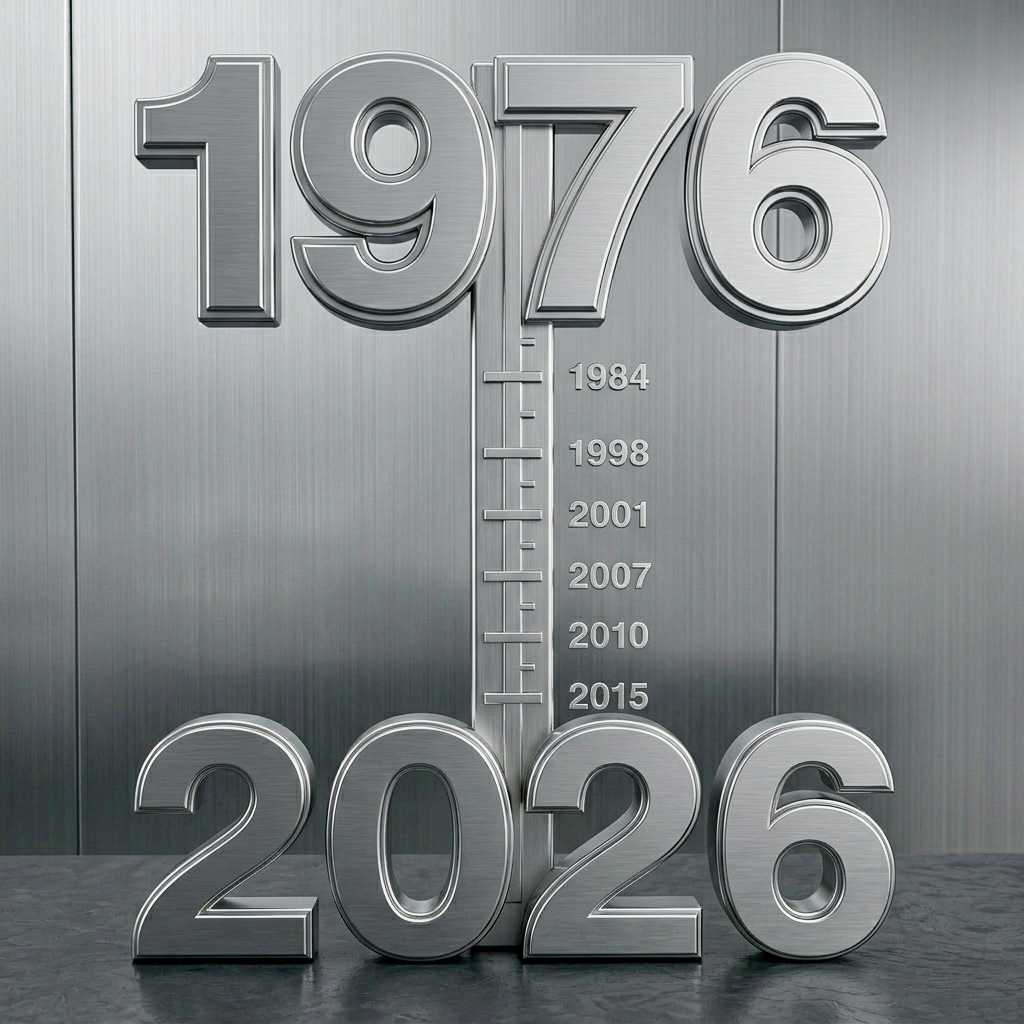
In April 1976, a small company formed in a California garage began a technological ripple that would become a global tidal wave. Over the next fifty years, Apple would repeatedly reshape personal computing, music, phones, tablets, wearables, and even the architecture of modern silicon chips. Its history is not a smooth upward arc; it is a dramatic story of invention, near-collapse, reinvention, and cultural transformation. This timeline traces the major moments, product launches, and technological pivots that define Apple’s first half-century. Apple Computer Company was founded on April 1, 1976 by Steve Jobs, Steve Wozniak, and Ronald Wayne in Los Altos, California. Their first product was not a polished consumer device but a bare circuit board: the Apple I. Released: July 1976 Key details: Unlike hobbyist kits of the era, the Apple I came pre-assembled. Buyers only needed a keyboard and monitor. Approximately 200 units were produced. The Apple II launched in April 1977 and became one of the most influential personal computers ever built. The Apple II became a massive commercial success, particularly after the release of VisiCalc, the first widely used spreadsheet program. This combination transformed the computer from a hobbyist tool into a serious business machine. By the early 1980s, Apple II sales generated billions in revenue. Key developments: Apple also begins work on more advanced systems, including the Lisa project and early graphical user interface concepts influenced by research from Xerox PARC. On December 12, 1980, Apple launched one of the most famous IPOs in technology history. More than 300 employees became millionaires overnight. The Apple Lisa introduced the commercial world to the graphical user interface (GUI). Technical specs: Price: $9,995 The Lisa was technologically revolutionary but commercially unsuccessful due to its cost. However, its interface concepts would soon reshape computing. The Macintosh launched January 24, 1984. It arrived with the famous “1984” Super Bowl commercial, directed by Ridley Scott. Key features: The Macintosh introduced millions of people to graphical computing. Later improvements included: These innovations created the desktop publishing revolution. Internal conflicts between Steve Jobs and CEO John Sculley led to Jobs being forced out. Jobs left Apple and founded NeXT Computer. Apple would struggle creatively for the next decade. This era saw many technological advances but also strategic missteps. The Macintosh II introduced: This system helped establish Apple in professional creative industries. Apple began exploring portable computing. The PowerBook 100 series introduced the now-standard laptop layout: This design became the template for modern laptops. Apple entered the handheld device market with the Newton. Features: Though innovative, Newton struggled with: Despite its problems, Newton anticipated the smartphone era. Apple licensed the Macintosh operating system to third-party manufacturers. Companies like: produced Mac-compatible machines. This decision weakened Apple’s hardware profits. By the mid-1990s Apple was losing money rapidly. Product lines were confusing and fragmented. Apple needed a new operating system and new leadership. Apple acquired NeXT in 1997. Steve Jobs returned to Apple as interim CEO. His first moves: Jobs reorganized Apple’s products into four categories: This strategy set the stage for Apple's rebirth. The iMac G3 was Apple's first major hit of the new era. The iMac sold 800,000 units in its first five months. It restored Apple’s profitability. Apple introduced the iBook, a colorful consumer laptop. Features: Apple helped popularize Wi-Fi computing. Mac OS X launched in March 2001. Based on NeXTSTEP, it introduced: Mac OS X would become the foundation of all Apple operating systems. Steve Jobs envisioned the Mac as the center of digital life. The iPod launched October 23, 2001. At first it was Mac-only. Within a few years it became the dominant portable music player. Apple launched the iTunes Music Store. Songs were priced at: $0.99 each Key innovations: By 2008 it became the largest music retailer in the world. Apple released multiple iPod models: The iPod became a cultural icon. Apple switched Macs from PowerPC processors to Intel chips. Advantages: On January 9, 2007, Steve Jobs unveiled the iPhone. Three devices in one: The multitouch interface replaced physical keyboards. It redefined the smartphone industry. The App Store launched July 2008. Developers could create applications for iPhone. Within a year: The mobile software economy was born. Apple introduced the iPad in January 2010. Features: The iPad created the modern tablet computing category. Steve Jobs passed away in October 2011. Tim Cook became CEO. Apple continued expanding into new categories. Apple launched iCloud for device synchronization. Features: Cloud services became central to the Apple ecosystem. Apple entered the financial technology space with Apple Pay. Features: Mobile payments gained widespread adoption. Apple’s first major new product category since the iPad. It eventually became the best-selling watch in the world. Apple began emphasizing services revenue. Wireless earbuds introduced: AirPods became a massive hit. Major redesign for the iPhone. Features: The home button disappeared. Apple launched its streaming service. Major shows included: Apple began competing in Hollywood. Apple replaced Intel processors with its own chips. First chip: M1 Advantages: Professional MacBook Pros returned with: Performance rivaled high-end workstations. Second generation Apple Silicon. Improvements: Apple entered spatial computing. Features: Vision Pro introduced a new paradigm for immersive computing. By the mid-2020s Apple’s ecosystem included: The company had become one of the most valuable in history. Key strengths: Over five decades Apple transformed multiple industries: Personal computing Digital publishing Music Smartphones Tablets Wearables Chip design Apple rarely invents a category first. Instead it: This pattern produced: The magic was not just invention. It was integration. At fifty years old Apple sits at the intersection of several technological frontiers: History suggests Apple’s next major breakthrough will likely come from the same formula that defined its past: bold design, deep engineering, and ruthless simplification. From a circuit board sold to hobbyists in 1976 to a global technology ecosystem touching billions of lives, Apple’s story remains one of the most extraordinary narratives in modern business and engineering. And like any good technological saga, the next chapter is still being written.
1976–1979: The Garage Years
1976 – Apple Computer is Founded
Apple I
Price: $666.66
1977 – The Apple II
Apple II Features
1978–1979 – Expansion
1980–1985: The First Computer Revolution
1980 – Apple Goes Public
1983 – Apple Lisa
Lisa Innovations
1984 – Macintosh
Macintosh 128K
1985 – Steve Jobs Leaves Apple
1986–1996: Innovation and Confusion
1987 – Macintosh II
Early 1990s – Portable Macs
Macintosh Portable (1989)
PowerBook (1991)
1993 – Newton MessagePad
Mid-1990s – Mac Clones
1996 – Crisis
1997–2001: The Comeback
1997 – Steve Jobs Returns
1998 – iMac
iMac Innovations
1999 – iBook
2001 – Mac OS X
2001–2007: The Digital Hub Strategy
2001 – iPod
First Generation iPod
2003 – iTunes Store
2004–2005 – iPod Expansion
2006 – Intel Transition
2007–2010: The Smartphone Revolution
2007 – iPhone
Original iPhone Specs
2008 – App Store
2010 – iPad
2011–2015: A New Era After Jobs
2011 – iCloud
2014 – Apple Pay
2015 – Apple Watch
Apple Watch Features
2016–2019: Services and Ecosystem Expansion
2016 – AirPods
2017 – iPhone X
2019 – Apple TV+
2020–2023: The Silicon Revolution
2020 – Apple Silicon
2021 – M1 Pro and M1 Max
2022 – M2 Chip
2023 – Apple Vision Pro
2024–2026: The Mature Ecosystem
The Legacy of Apple’s First Fifty Years
The Apple II and Macintosh made computers accessible.
Macintosh and LaserWriter launched desktop publishing.
The iPod and iTunes changed how music is distributed.
The iPhone reshaped communication and software.
The iPad created a new computing category.
Apple Watch made health monitoring mainstream.
Apple Silicon redefined personal computer performance.
The Strange Pattern of Apple’s Success
The Road Ahead