Humanity has never felt safer while being more exposed.
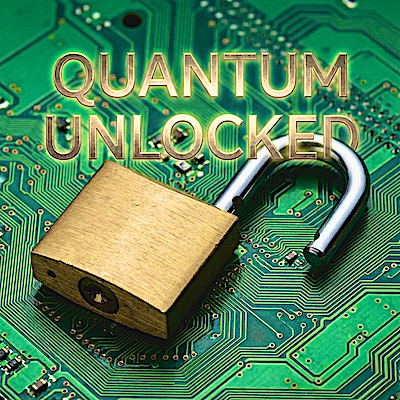
Every day, billions of people see a tiny padlock glow reassuringly in a browser bar and mistake symbolism for security. That icon has become a secular talisman. It tells us our bank transfers are safe, our medical records sealed, our confessions private. It whispers that the mathematics beneath RSA and elliptic-curve cryptography are eternal.
They are not.
What we are living through right now is the greatest false sense of security in human history - a calm that exists only because the bomb hasn’t gone off yet.
The so-called “Quantum Security Apocalypse” is often waved away as nerd paranoia, a Y2K ghost story for people who read white papers instead of tabloids. That dismissal is not just wrong; it’s dangerous. This is not speculation. It is arithmetic. Shor’s algorithm already proves, on paper, that a sufficiently powerful quantum computer can shred today’s public-key cryptography in polynomial time. The physics is sound. The math is settled. The only remaining variable is engineering scale, not feasibility.
When that machine comes online - whether in 2032 or 2042 is trivia - the cryptographic bedrock of the modern world collapses in a single moment. No gradual erosion. No warning siren. Just instant, total compromise.
And here’s the part most people still don’t understand:
The breach has already happened.
Right now, governments and well-resourced adversaries are vacuuming up encrypted internet traffic at planetary scale. This practice has a name: Harvest Now, Decrypt Later. Encrypted emails, financial transactions, health records, source communications - scooped up, indexed, and stored like unopened letters in a vault. Not because they can read them today, but because they know they will.
Think about the time axis here. The danger is not future surveillance; it is retroactive exposure. The journalist’s source who trusted encryption in 2024. The dissident who organized quietly under authoritarian rule. The biometric data you cannot change - your face, your fingerprints, your DNA - protected today by cryptography that will eventually become a historical curiosity.
When quantum decryption arrives, the past opens all at once.
The popular retort - “I have nothing to hide” - misses the point so badly it borders on intellectual negligence. This is not about embarrassment. This is about power. It is about turning decades of supposedly private human communication into an indexed, searchable archive of leverage, coercion, and control. Transparency is only virtuous when it’s voluntary.
The response from industry has been, at best, lethargic. Yes, the U.S. National Institute of Standards and Technology is finalizing post-quantum cryptography standards. Yes, lattice-based and hash-based schemes exist that resist known quantum attacks.
But the idea that we will simply “upgrade the internet” is a fantasy pitched by people who have never stared into the guts of legacy infrastructure.
You do not hot-swap the cryptographic foundation of civilization.
Banks still run mission-critical systems written in COBOL. Power grids depend on industrial control hardware designed before “cybersecurity” was even a word. Satellites launched decades ago cannot be recalled for a firmware update. These systems will outlive the cryptography protecting them, creating a world where the locks are futuristic and the doors are made of plywood.
We are building a future where encryption is quantum-strong - but only for systems that can afford to be rebuilt from scratch. Everything else becomes a soft target, frozen in time and permanently exposed.
Q-Day (quantum decryption day) is not a milestone to celebrate. It is a cliff edge.
From this moment forward, every packet encrypted with classical public-key cryptography should be treated as public information with a delayed release date. The clock is already ticking. We are just choosing not to hear it.
What makes this truly surreal is what we’re distracted by instead. Tech giants breathlessly market generative AI that can write sonnets and summarize emails while the structural integrity of global digital trust quietly decays beneath us. We are polishing the furniture while termites hollow out the beams.
This moment demands urgency on the scale of the Manhattan Project: forced migration timelines, aggressive key-rotation policies, minimized data retention, and a blunt acknowledgment that convenience has become an existential liability.
Until then, stop trusting the padlock.
The house has already been robbed. The thieves are just waiting for the lights to turn on.